Source Acrylic Electronic Sign Bracket for Road, Railway, Parking
Find 30 options for the Acrylic Electronic Sign Bracket designed for road construction, railway, and parking applications. Buyers can compare specifications including mounting methods, LED compatibility, and material variations to select the right solution for their infrastructure projects.
Key considerations
Products List


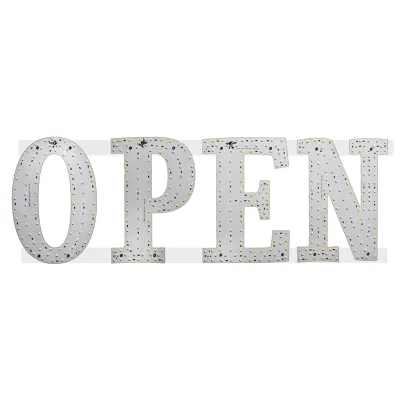


Outdoor Acrylic 3D Frontlit Letter Custom Shop Advertising Electronic Sign
$53.00 - $58.00
MOQ: 1000 Pieces


Comprehensive Sourcing Guide
Strategic Sourcing Guide for Acrylic Electronic Sign Brackets
Understanding the Product Category and Technical Variants
The core keyword "Acrylic Electronic Sign Bracket" often leads buyers into a complex landscape where the bracket itself is a structural component supporting a larger electronic display system. In the current market, specifically within the Guangzhou, China manufacturing hub, the terminology can sometimes blur the lines between the sign face and its mounting infrastructure. Buyers must distinguish between the primary electronic signage, which frequently utilizes acrylic materials for its face, and the specific brackets designed to hold these units securely.
The supplied data indicates a diverse range of product attributes under the umbrella of electronic signs. While many listings highlight "Acrylic" as the primary material for the sign face, the structural supports vary significantly. Some units are described with "Stainless Steel" or "Carbon Steel" materials, particularly when the application involves heavy-duty environments like road construction or railway systems. For instance, specific models such as the "sign bracket" or "BP" model are noted to have a "Round Shape" and are designed for "Structural Support." These brackets often feature "Foldable Legs" and are engineered to withstand high wind loads, with a specific "Anti-wind Capability" rated as "Strong."
When sourcing, it is critical to recognize that the "Acrylic" attribute typically applies to the lettering or the sign face itself, which is often "Custom Made" with "Custom Font" options. The bracket, however, serves as the anchor. The data shows that while some signs are "Frontlit" or "Backlit" using "Water-Proof LED Modules," the supporting hardware must be robust enough to handle the weight and environmental exposure. The "Footprint" of deployed units can be substantial, with specific models measuring "33"X34" Deployed," requiring brackets that offer a stable base. The "Actual Weight" of such assemblies can reach "15.64lbs," necessitating a bracket with "High Strength" capabilities.
Technical Specifications and Material Compatibility
Selecting the correct bracket requires a deep dive into the technical specifications provided by the manufacturer. The material composition is the first critical factor. The supply chain data reveals that while the sign face is often acrylic, the bracket materials listed include "Stainless Steel" and "Carbon Steel." Carbon steel brackets are often treated with "Hot Dipped Galvanized" finishes and "Powder Coated" surfaces to prevent corrosion, especially for outdoor applications. The "Finish" is typically "Black Powder Coated," which not only aids in aesthetics but also provides a layer of protection against the elements.
Dimensional specifications are equally vital. The "Standard" for some brackets is listed as "1.75''" in thickness, while others are defined by their deployed dimensions, such as "2.13x2.18x5.89" for specific models. The "Height" of the assembly can vary, with some units reaching "40 inches." Buyers must verify if the bracket is designed for a "Customized Size" or if it adheres to a fixed standard. The "Mounting Way" is another key specification, with options ranging from "Mounting on The Wall" to fully "Customized" installations. This flexibility is essential for diverse applications ranging from "Road Construction" to "Parking" areas.
The electrical integration is another technical consideration. The signs themselves utilize "Water-Proof LED" sources with "LED Transformers" capable of operating from "110V to 240V." The bracket must accommodate the wiring for these components without compromising structural integrity. The "Light Source" is often described as "Water-Proof LED Modules or Strips," which implies that the bracket design must allow for proper ventilation and heat dissipation to prevent LED failure. The "LED Emitting" type, whether "Frontlit" or "Backlit," influences the depth and mounting requirements of the bracket.
Compliance, Certification, and Safety Standards
In the realm of electronic signage and structural supports, compliance is non-negotiable. The provided data lists a comprehensive set of certifications: "CE/UL/FCC/RoHS/SAA." These certifications indicate that the electronic components and the manufacturing process meet international safety and environmental standards. The "CE" mark suggests conformity with health, safety, and environmental protection standards for products sold within the European Economic Area. "UL" certification is critical for North American markets, ensuring electrical safety. "FCC" compliance addresses electromagnetic interference, while "RoHS" restricts the use of specific hazardous materials in electrical and electronic equipment. "SAA" is a recognized safety certification in Australia and New Zealand.
For the structural aspect of the bracket, specific standards must be verified. The data mentions "Mutcd" and "Nchrp-350" as standards for "Thick Standard" applications. These are likely references to the Manual on Uniform Traffic Control Devices (MUTCD) and the National Cooperative Highway Research Program (NCHRP) Report 350, which are pivotal for traffic safety equipment. These standards dictate the crashworthiness and structural integrity required for signs used in "Road Construction" or "Railway" environments. The "Signs" themselves are noted to be "3/8" Thick," which aligns with specific regulatory thickness requirements for visibility and durability.
Buyers must ensure that the supplier can provide documentation proving compliance with these standards. The "Certification" field in the product data is a strong indicator of quality, but it should be treated as an observation of the specific listing rather than a blanket guarantee for all products in the category. Verification of the "High Strength" claim against the "Nchrp-350" standard is essential for any application involving public safety or high-traffic areas.
Cost Drivers and Pricing Dynamics
The pricing for acrylic electronic sign brackets is influenced by a complex interplay of factors, including material costs, customization levels, and certification requirements. The observed price range in the market spans from $0.1 to $299 USD. This wide variance reflects the difference between simple mounting hardware and complex, fully integrated electronic sign systems with custom brackets.
The "Customization" attribute is a primary cost driver. Products with "Custom Made" fonts, "Customized Size" standards, and "Customized" mounting ways will invariably cost more than off-the-shelf solutions. The material choice also impacts price; "Stainless Steel" is generally more expensive than "Carbon Steel," though the latter may require more intensive surface treatments like "Hot Dipped Galvanized" to achieve similar longevity. The "Packing" method, described as "Foam Protection + Wooden Case" for signs or "Container" for larger brackets, adds to the logistics cost, which is often factored into the final price.
The "MOQ" (Minimum Order Quantity) is another significant factor. The observed MOQ range is from 1 to 3000 units. For buyers requiring small batches or prototypes, the unit cost will be higher due to the setup costs for custom tooling and production lines. Conversely, large-volume orders can leverage economies of scale, bringing the unit cost closer to the lower end of the observed range. Buyers should also consider the "Lead Time," which is not explicitly detailed in the data but is implied by the complexity of "Customized" orders. High-volume orders with strict certification requirements may require longer production cycles.
Typical Applications and Environmental Considerations
The versatility of acrylic electronic sign brackets is evident in their diverse applications. The data explicitly lists "Road Construction," "Railway," "Parking," and "Road" as primary use cases. These environments present unique challenges, including exposure to wind, rain, vibration, and potential impact. The "Anti-wind Capability" rated as "Strong" is a critical feature for signs used in "Road Construction" or "Railway" settings where wind loads can be significant.
For "Parking" applications, the "Waterproof" nature of the "LED" components and the corrosion-resistant "Powder Coated" or "Galvanized" finishes of the brackets are essential. The "Foldable Legs" feature allows for easy transport and deployment in temporary construction zones, while the "Deployed" footprint ensures stability once in place. The "Actual Weight" of 15.64lbs suggests a balance between portability and stability, making these units suitable for temporary signage that needs to be moved frequently.
The "Usage" is defined as "Structural Support," indicating that the bracket is not merely a cosmetic add-on but a load-bearing component. In "Road Construction" scenarios, the bracket must support the sign against dynamic loads from passing traffic and environmental factors. The "High Strength" attribute ensures that the bracket can withstand these forces without deformation or failure. The "Round Shape" of some brackets may be designed to reduce wind resistance, further enhancing their performance in open environments.
Supplier Evaluation and Quality Control Protocols
Evaluating suppliers for acrylic electronic sign brackets requires a rigorous approach to quality control and verification. The "Location" of the supplier is a key indicator, with "Guangzhou China" being a prominent hub for this industry. Buyers should verify the supplier's ability to produce "Customized" solutions and their track record in meeting "CE/UL/FCC/RoHS/SAA" certifications.
Quality control should focus on the "Surface Treatment" and "Finish." The "Hot Dipped Galvanized" and "Powder Coated" processes must be consistent to prevent rust and corrosion. Buyers should request samples to test the "Anti-wind Capability" and the structural integrity of the "Foldable Legs." The "Packing" method, whether "Foam Protection + Wooden Case" or "Container," should be inspected to ensure that the product arrives without damage.
The "Standard" of "1.75''" or "2.13x2.18x5.89" should be verified against the actual product dimensions. Any deviation from the stated specifications could indicate a lack of quality control. Buyers should also check the "Light Source" and "LED Transformer" compatibility to ensure that the electrical components function correctly within the bracket's design. The "Certification" documents should be cross-referenced with the specific product model to ensure authenticity.
Long-Term Procurement and Maintenance Strategies
Long-term procurement strategies for acrylic electronic sign brackets involve planning for maintenance, scalability, and lifecycle management. The "Customized" nature of these products means that replacement parts or additional units may need to match the original specifications exactly. Buyers should maintain a record of the "prod_model" numbers, such as "DY-FONRLIT014" or "Acrylic letters-8," to ensure consistency in future orders.
The "Waterproof" and "Anti-wind" features are long-term assets that reduce maintenance costs. However, the "LED" components will eventually need replacement. Buyers should inquire about the availability of spare parts and the ease of accessing the "LED Modules or Strips" for maintenance. The "Mounting Way" should be designed to allow for easy access to the electrical components without dismantling the entire structure.
Scalability is another consideration. If a buyer plans to expand their signage network, they should choose a supplier capable of handling large "MOQ" orders with consistent quality. The "Lead Time" and production capacity should be discussed to ensure that the supplier can meet future demand. The "High Strength" and "Structural Support" capabilities should be maintained across all units to ensure uniform safety and performance.
Comparative Analysis of Bracket Types
To assist buyers in making informed decisions, the following table compares key attributes of the different bracket types observed in the market data. This comparison highlights the differences in material, application, and structural features.
| Feature | Carbon Steel Bracket | Stainless Steel Bracket | Acrylic Sign Assembly |
|---|---|---|---|
| Primary Material | Carbon Steel | Stainless Steel | Acrylic (Face) + Steel (Support) |
| Surface Treatment | Hot Dipped Galvanized, Powder Coated | N/A (Inherent corrosion resistance) | N/A |
| Typical Finish | Black Powder Coated | Natural or Coated | Custom Made |
| Key Application | Road Construction, Railway, Parking | High-corrosion environments | General Electronic Signage |
| Structural Feature | Foldable Legs, High Strength | High Strength, Structural Support | Frontlit/Backlit, Waterproof |
| Standard Compliance | Mutcd, Nchrp-350 | Varies | CE, UL, FCC, RoHS, SAA |
| Weight Range | ~15.64lbs | Varies | Varies |
| Mounting | Customized, Wall Mount | Customized | Wall Mount or Customized |
This table illustrates that while the "Acrylic" component is central to the visual aspect of the sign, the "Bracket" is the critical structural element. The choice between "Carbon Steel" and "Stainless Steel" depends on the environmental conditions and the specific "Application" requirements. The "Foldable Legs" and "High Strength" attributes are common to both steel types, ensuring stability in "Road Construction" and "Railway" settings.
Final Procurement Recommendations
Sourcing acrylic electronic sign brackets requires a balanced approach that considers technical specifications, compliance, cost, and long-term maintenance. Buyers should prioritize suppliers who can demonstrate "High Strength" capabilities and adherence to "Mutcd" and "Nchrp-350" standards. The "Customization" options should be leveraged to meet specific project needs, but the "MOQ" and "Lead Time" must be carefully managed to avoid delays.
Verification of "CE/UL/FCC/RoHS/SAA" certifications is essential for ensuring safety and regulatory compliance. The "Waterproof" and "Anti-wind" features should be tested to confirm their effectiveness in the intended environment. By focusing on these key areas, buyers can secure high-quality brackets that provide reliable structural support for their electronic signage projects. The "Guangzhou China" origin suggests a mature supply chain, but due diligence in supplier evaluation remains paramount to ensure product quality and consistency.
FAQs
What materials are used for acrylic electronic sign brackets?
Brackets are typically constructed from Stainless Steel or Carbon Steel to ensure structural support. While the sign face uses Acrylic, the supporting hardware requires high-strength metals like Carbon Steel treated with Hot Dipped Galvanized finishes for outdoor durability.
Can these brackets be customized for specific mounting needs?
Yes, customization is available for mounting ways and sizes to fit various installation requirements. Buyers can request Custom Made fonts and Customized Size standards, with mounting options including wall mounting or fully customized setups for specific applications.
Which certifications do the electronic sign components hold?
The products carry CE, UL, FCC, RoHS, and SAA certifications for international safety compliance. These marks indicate that the electronic components and manufacturing processes meet rigorous health, safety, and environmental standards for markets in Europe, North America, and Australia.
How strong is the anti-wind capability of these units?
The units feature a Strong anti-wind capability designed to withstand high wind loads in outdoor environments. This strength is critical for applications in Road Construction and Railway settings where stability against dynamic environmental forces is required for safety.
What is the typical packaging method for these signs?
Signs are packed using Foam Protection combined with a Wooden Case to prevent damage during transit. Larger brackets or units may be shipped in a Container, ensuring that the structural components and delicate LED modules arrive in perfect condition.
Where are these acrylic electronic sign brackets manufactured?
The products originate from Guangzhou, China, a major manufacturing hub for electronic signage. This location supports the production of customized units with specific certifications and materials like Stainless Steel and Carbon Steel for global export.